
What Is the Best Heating System for a Warehouse?
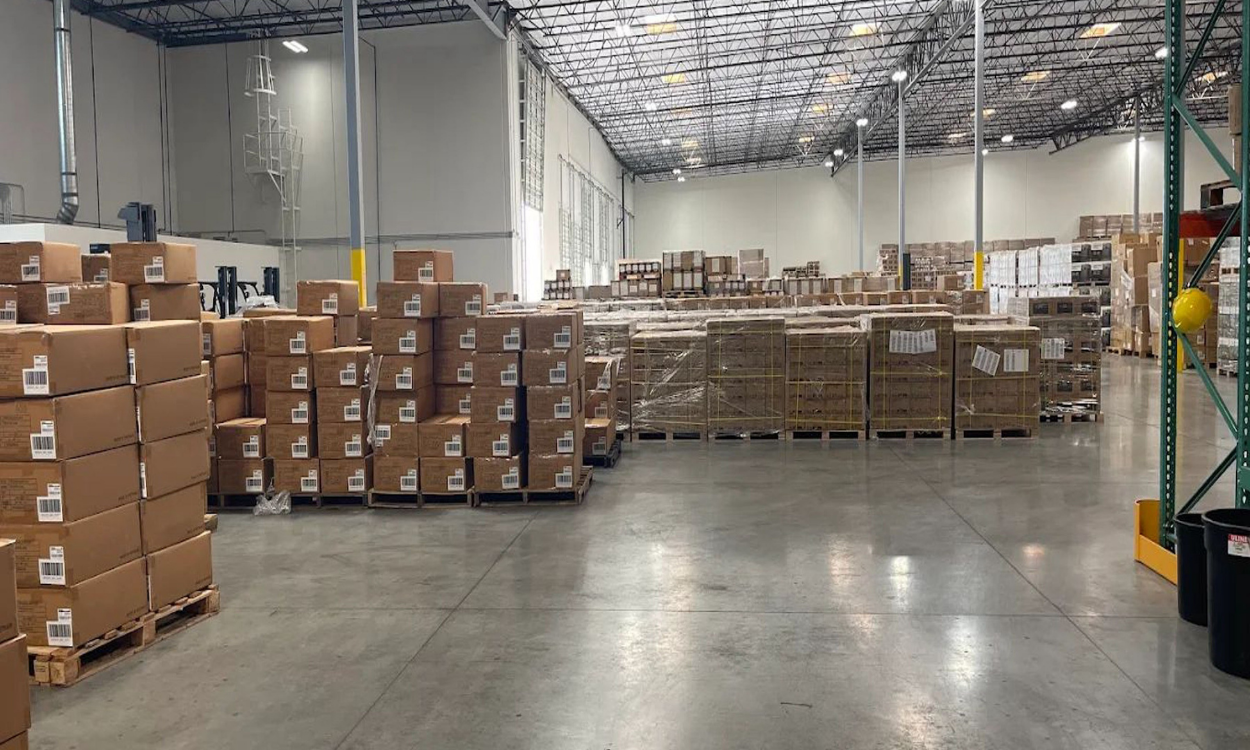
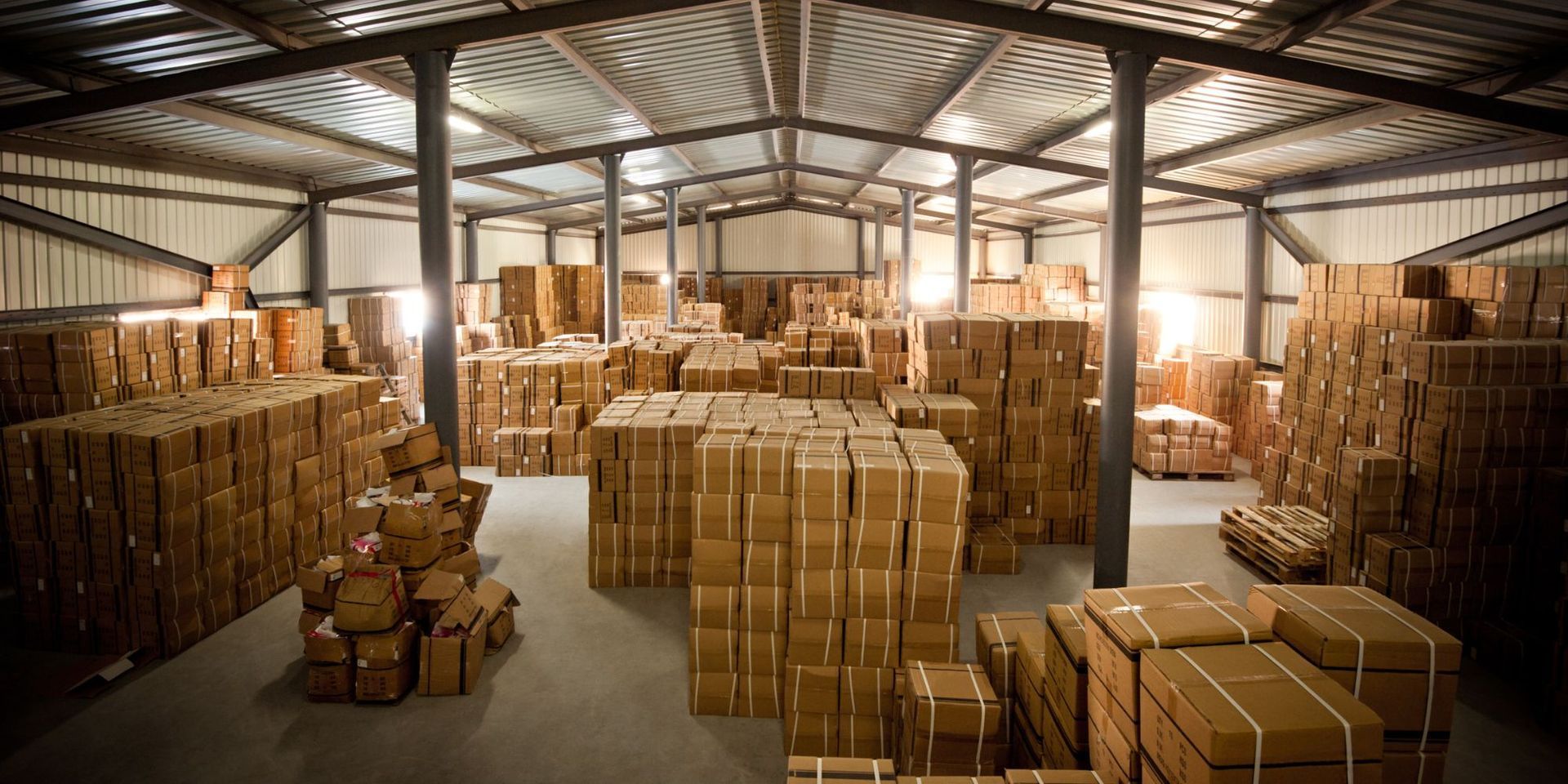
Choosing the best heating system for a warehouse is not always straightforward. Warehouses are large, open and often difficult to heat efficiently, especially when they have high ceilings, loading bays, roller shutter doors, poor insulation or different working zones.
The right warehouse heating system should do more than simply warm the building. It should help maintain a comfortable working environment, support staff productivity, protect stock or equipment where needed, reduce wasted energy and provide reliable long-term performance.
For most warehouses, the best heating system will depend on the size of the building, how the space is used, the height of the roof, the level of insulation, the number of open-door areas and whether the whole space needs heating or only specific work zones.
At Winrow, we specialise in warehouse heating, commercial heating installation and industrial heating systems for large spaces across Runcorn, Cheshire, Manchester, Liverpool, Chester, Preston, Stoke-on-Trent, the North West, North Wales, the Midlands and the wider UK.
Why Warehouses Are Difficult to Heat
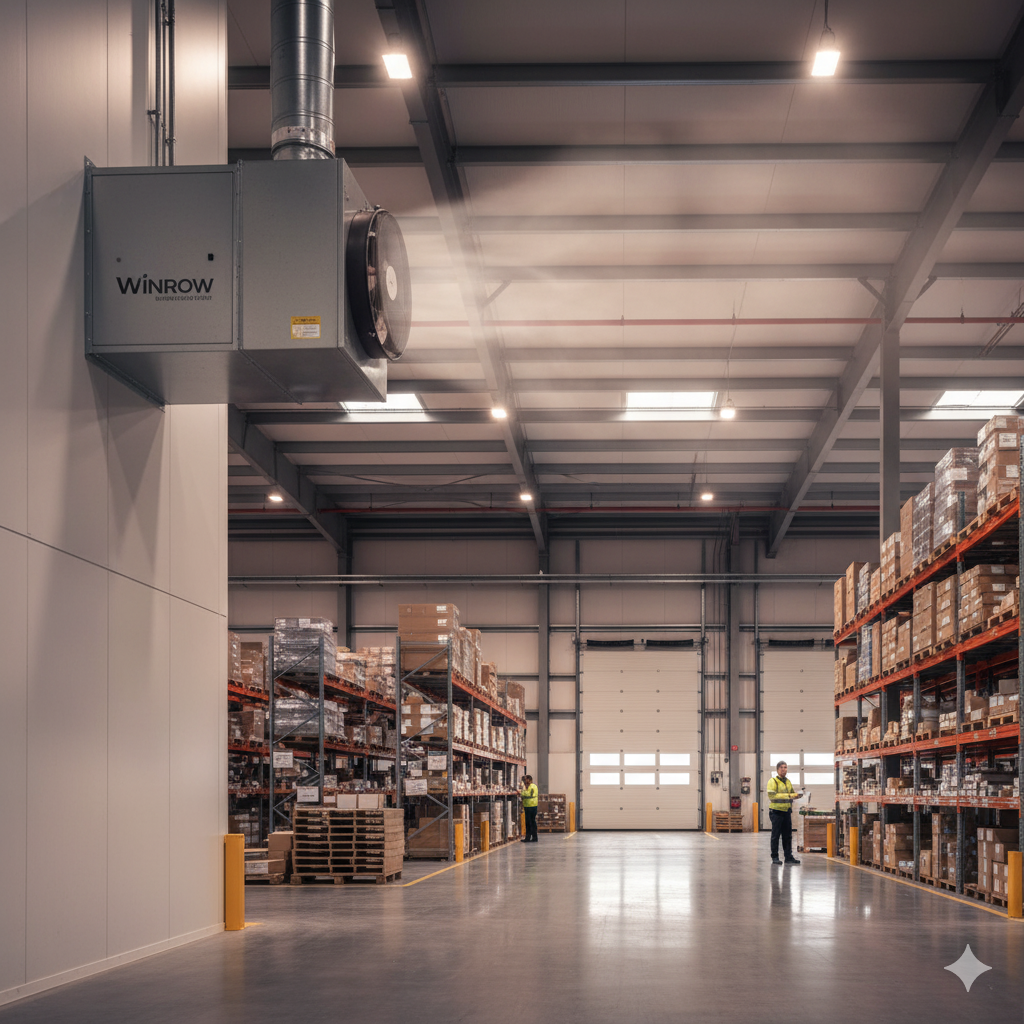
Warehouses create unique heating challenges because they are very different from offices, shops or smaller commercial units.
Many warehouses have:
- High ceilings
- Large open floor areas
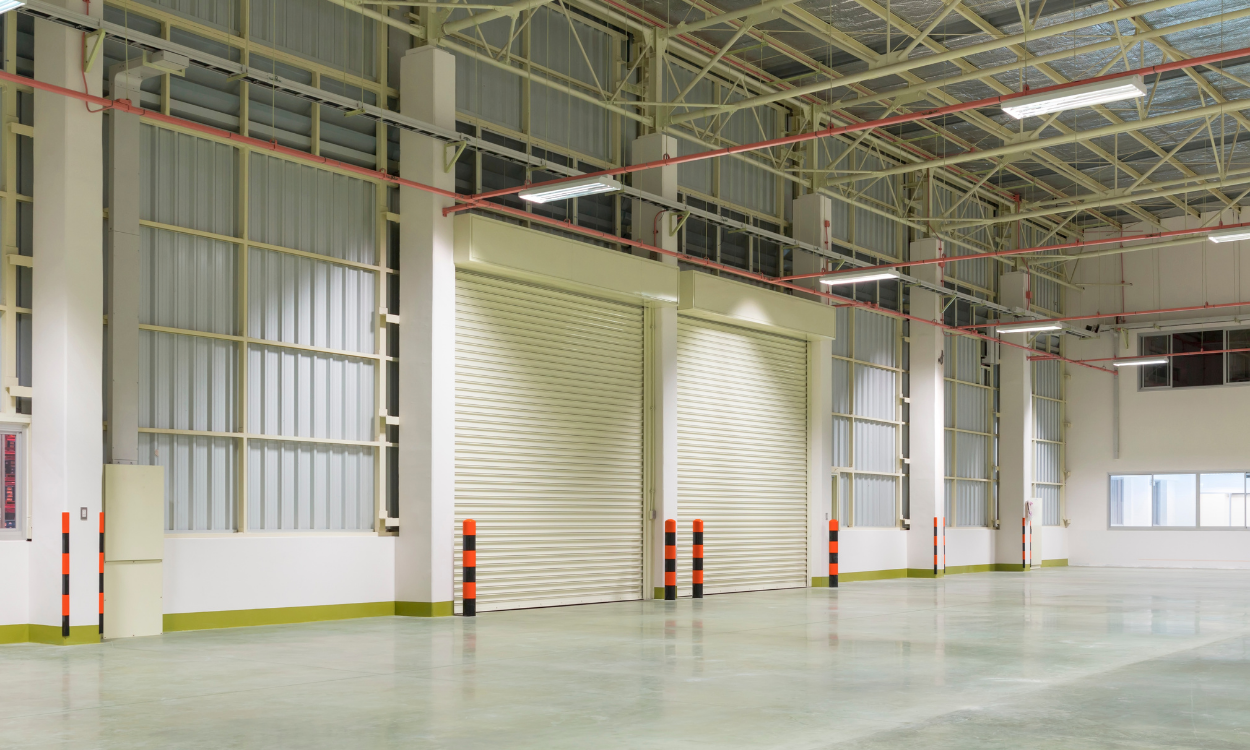
- Roller shutter doors
- Loading bays
- Poor or ageing insulation
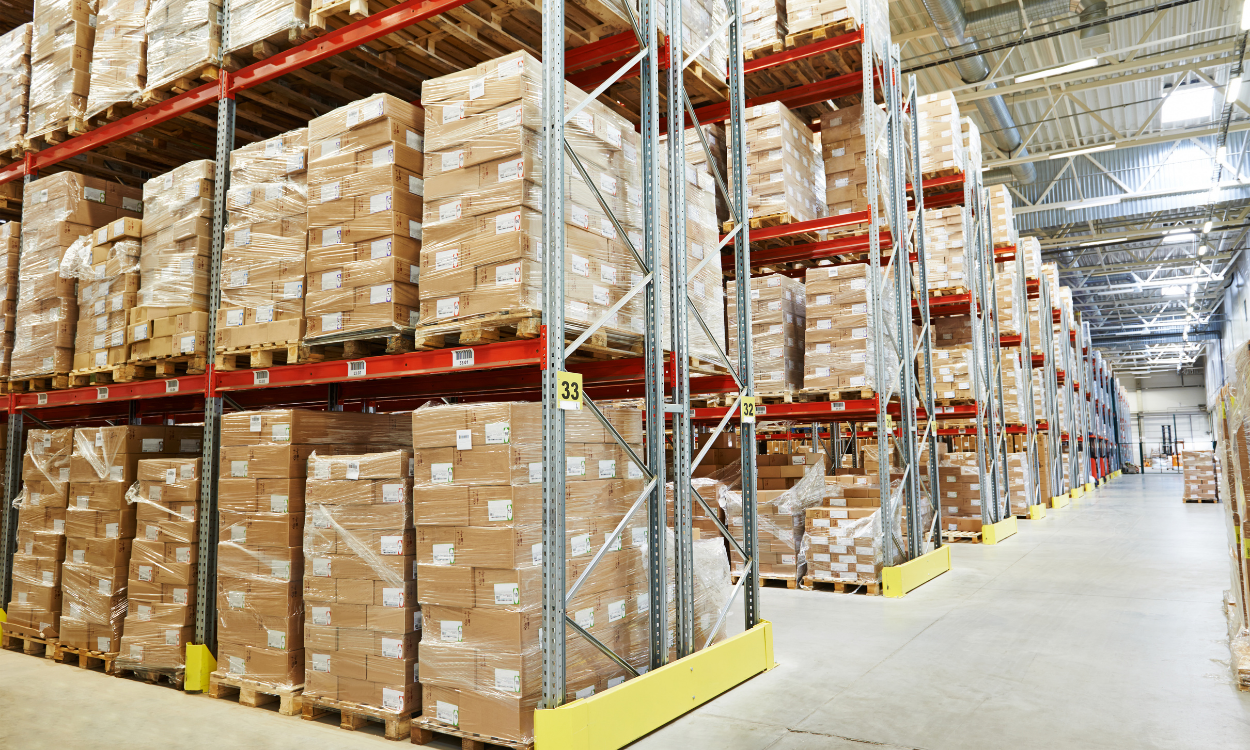
- Racking systems
- Changing occupancy levels
- Heat loss through roofs, walls and doorways
- Specific areas where staff are working for long periods
This means a standard heating approach is rarely the most efficient option. A poorly designed warehouse heater setup can lead to cold spots, wasted energy, uncomfortable working conditions and higher running costs.
A professional industrial heating installation should look at how the warehouse operates in real life, not just the square footage of the building.
What Is the Best Heating System for a Warehouse?
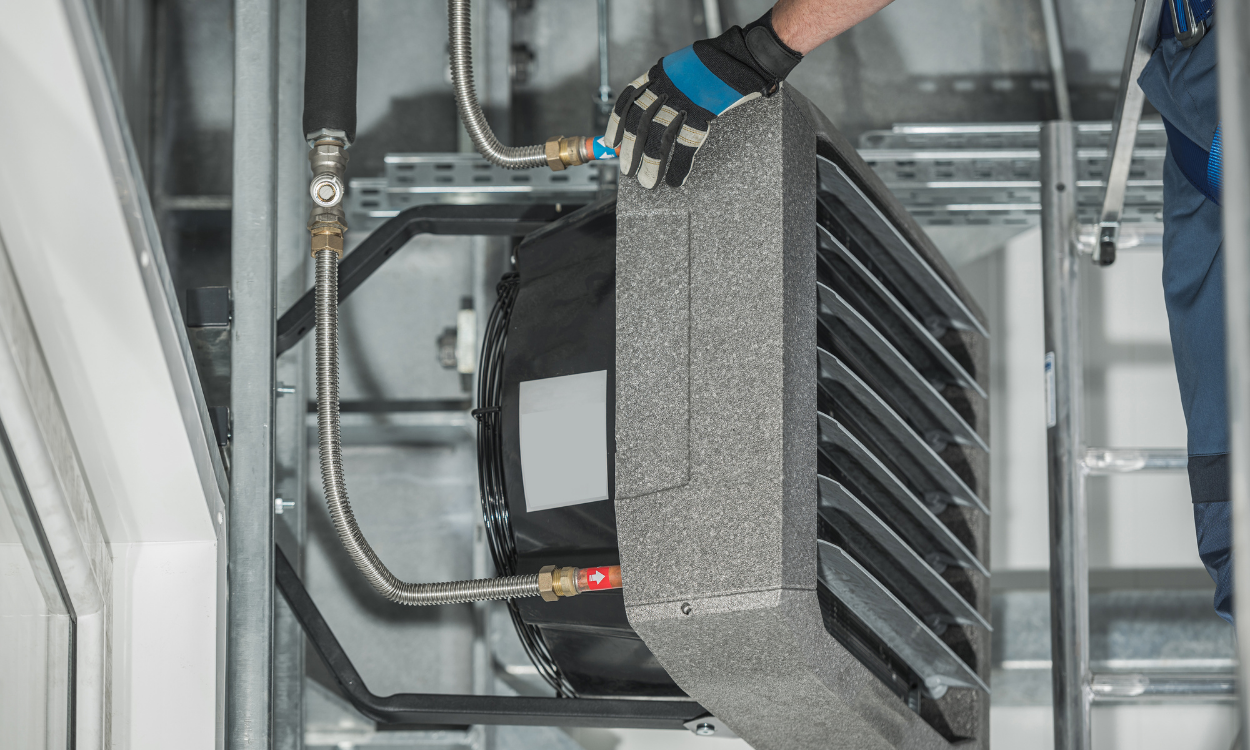
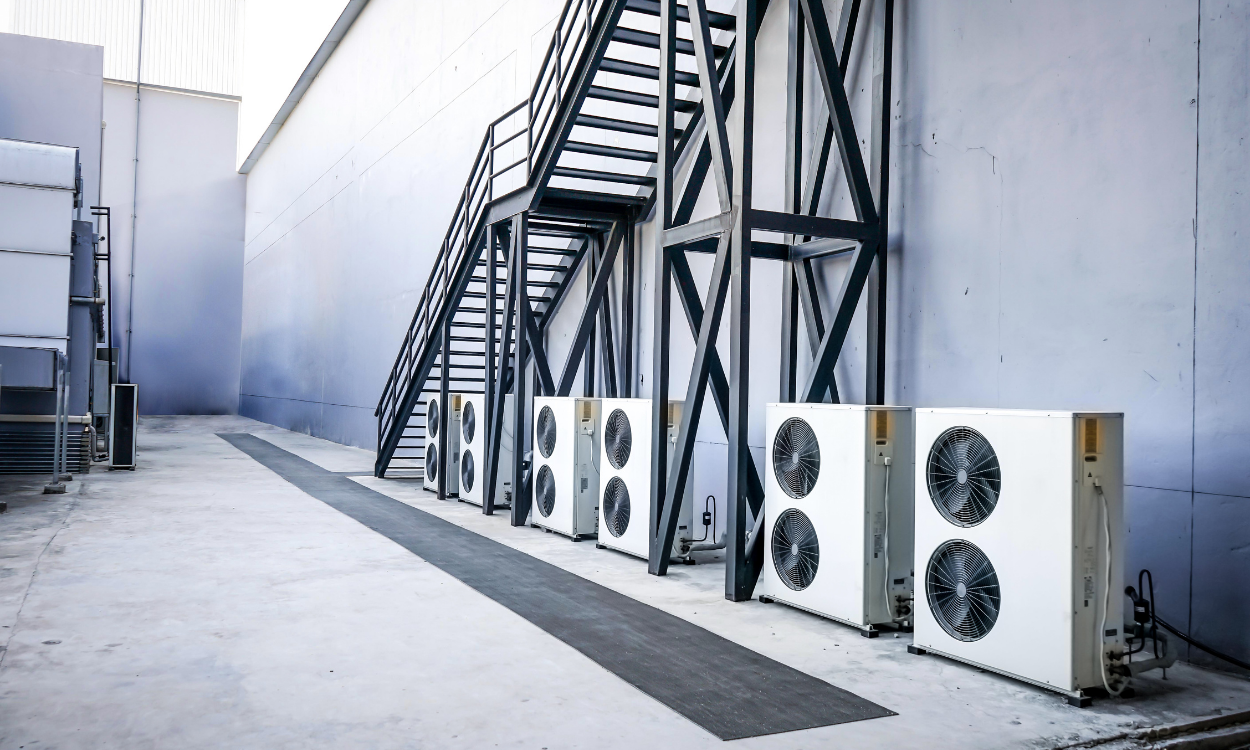
In many cases, warm air heating systems are one of the most practical and effective choices for warehouse environments. They are designed to heat large spaces quickly and can be suitable for warehouses, factories, workshops, showrooms, retail units, garages and industrial buildings.
However, the best system depends on the building. Some warehouses may benefit from warm air heaters, while others may need radiant heating, suspended heaters, ducted systems, air rotation units, destratification fans or a combination of technologies.
The key is choosing a system that matches the building, the business and the way the space is used.
Warm Air Heating Systems for Warehouses
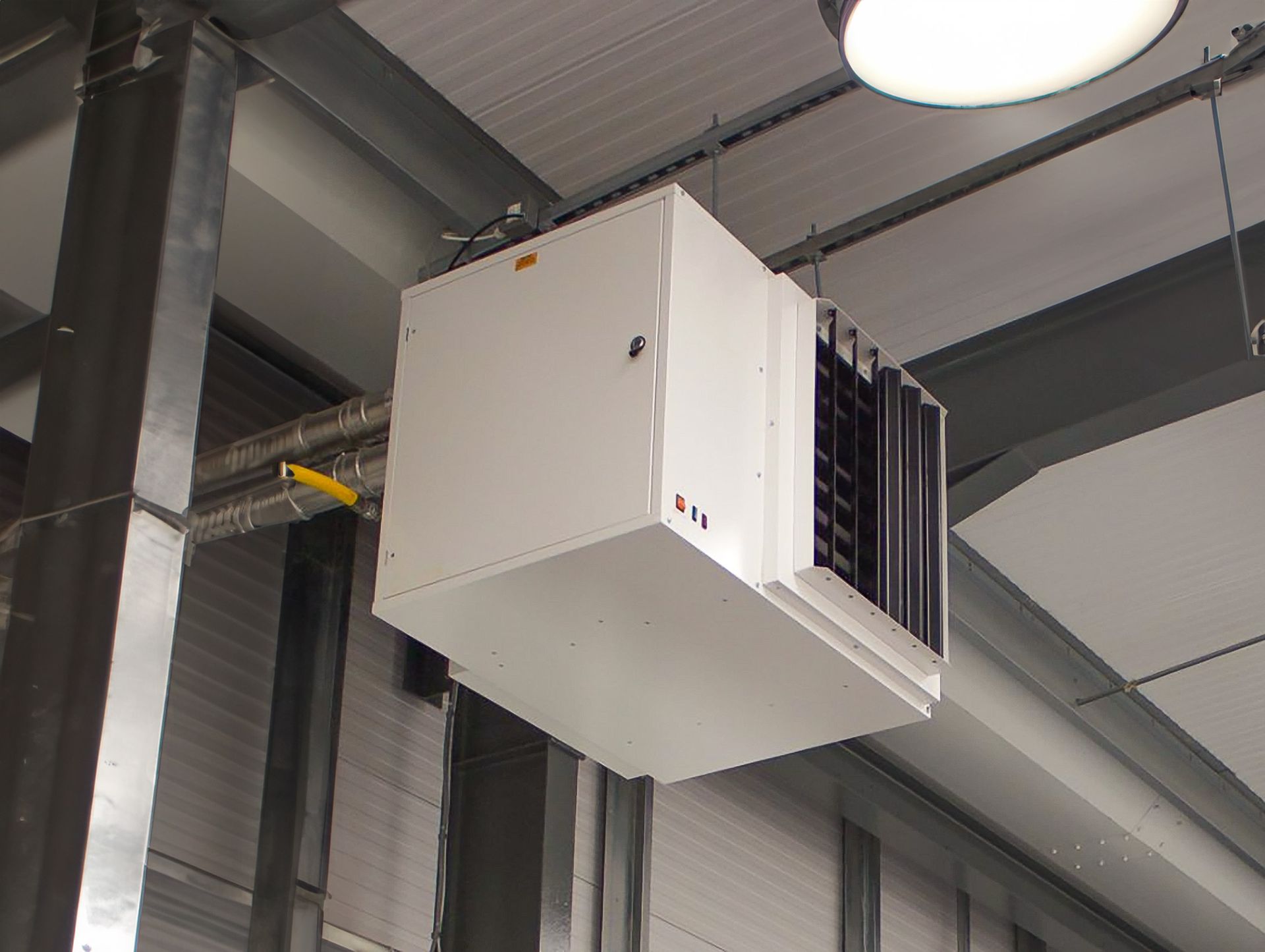
Warm air heating systems are a popular choice for many warehouses because they heat air directly and distribute it around the building. This can make them suitable for large open spaces where consistent heat is required.
Benefits of Warm Air Heating
A well-designed warm air system can offer:
- Fast heat-up times
- Good coverage across large spaces
- Flexible installation options
- Efficient performance when correctly sized
- Compatibility with suspended or floor-standing units
- Practical heating for warehouses, factories and workshops
Warm air systems are often used where businesses need to heat a large area rather than only a small workstation or localised zone.
For larger sites, professional design is especially important. If the units are undersized, the building may never reach a comfortable temperature. If they are oversized or poorly positioned, the system may waste energy or create uneven heating.
Winrow provides warm air heating and hot water systems designed around the needs of commercial and industrial buildings.
Radiant Heating for Warehouses
Radiant heating works differently from warm air heating. Instead of heating all the air within a space, radiant heaters warm people, surfaces and objects directly.
This can be useful in warehouses where only certain areas need heating, such as:
- Packing benches
- Workstations
- Loading areas
- Maintenance bays
- Production zones
- Staff work areas within a larger unheated space
When Radiant Heating May Be Suitable
Radiant heating may be a good option where it is not practical or cost-effective to heat the full warehouse. For example, if staff only work in one part of a large building, targeted radiant heating may help improve comfort without heating unnecessary areas.
However, radiant heating is not always the best choice where full-building comfort is required. It needs to be assessed properly as part of the wider warehouse heating design.
Space Heaters for Industrial Buildings
Space heaters are commonly used in industrial and commercial environments because they can provide powerful heat output for large buildings.
They may be suitable for:
- Warehouses
- Factories
- Workshops
- Garages
- Sports halls
- Industrial units
- Showrooms
- Retail storage areas
The right type of space heater will depend on available fuel, building size, ventilation, mounting options, heat distribution and safety requirements.
Winrow supplies and installs industrial heating products for a wide range of commercial and industrial spaces.
Key Factors When Choosing a Warehouse Heating System
1. Building Size and Roof Height
The larger and taller the warehouse, the more carefully the system needs to be designed. High ceilings can lead to warm air rising away from the working area, which may increase energy waste if the system is not planned correctly.
In some warehouses, destratification fans or air rotation systems may help push warm air back down towards occupied areas.
2. Insulation and Heat Loss
A warehouse with poor insulation will lose heat more quickly. Roller shutter doors, loading bays, rooflights and older cladding can all contribute to heat loss.
Before choosing a warehouse heater, it is worth considering whether building improvements could reduce heat loss and improve efficiency.
3. Full-Space Heating vs Zoned Heating
Not every warehouse needs to be heated in the same way throughout. Some businesses only need heating in specific areas, while others need consistent temperatures across the whole building.
Zoned heating can be useful for:
- Packing areas
- Staff workstations
- Offices within warehouses
- Loading bays
- Production zones
- Areas with different shift patterns
A zoned approach can help reduce wasted energy by heating the areas that actually need it.
4. Type of Work Being Carried Out
The type of work carried out inside the warehouse matters. A storage-only warehouse may have different heating needs from a fulfilment centre, manufacturing facility, workshop or distribution hub with staff working in the building all day.
UK workplace temperature guidance states that indoor workplaces should be reasonable, with guidance suggesting at least 16°C for many indoor workplaces, or 13°C where much of the work involves rigorous physical effort. You can read more on GOV.UK workplace temperature guidance and the HSE workplace temperature guidance.
5. Energy Efficiency and Running Costs
For large buildings, running costs can quickly become a major issue. The most efficient system is not always the cheapest system to install. A low-cost installation may become expensive over time if it is poorly sized, badly positioned or unsuitable for the building.
An energy-efficient heating system for large buildings should be designed around:
- Building volume
- Heat loss
- Occupancy
- Working hours
- Fuel availability
- Control options
- Zoning requirements
- Maintenance needs
This is where professional commercial heating installation makes a significant difference.
Why Correct Heater Sizing Matters
Correct sizing is one of the most important parts of any industrial heating installation.
If the system is too small, it may struggle to heat the warehouse properly, leading to cold areas, overworking equipment and poor performance. If the system is too large, it may cycle inefficiently, waste energy and create uncomfortable temperature changes.
A proper heating assessment should consider:
- Floor area
- Building height
- Insulation levels
- Door openings
- Air changes
- Heat loss
- Working zones
- Existing heating equipment
- Required temperature
- Future business use
This is why a site survey is strongly recommended before deciding which warehouse heating system to install.
Gas Safe Compliance and Professional Installation
Where gas-fired systems are used, work should be carried out by appropriately qualified engineers. The Gas Safe Register is the official list of businesses legally permitted to carry out gas work in the UK.
Businesses should also be aware of relevant gas safety responsibilities and maintenance requirements. The Health and Safety Executive provides guidance on the safe installation, maintenance and use of gas systems, appliances and flues through its Gas Safety Installation and Use guidance.
Using experienced Gas Safe commercial heating engineers helps ensure that warehouse heating systems are installed, serviced and maintained safely and professionally.
When Should a Warehouse Heating System Be Replaced?
A warehouse heating system may need replacing if it is no longer performing efficiently or reliably.
Common warning signs include:
- Rising energy bills
- Frequent breakdowns
- Uneven heating
- Cold spots
- Noisy operation
- Poor temperature control
- Ageing or obsolete equipment
- Increasing repair costs
- Staff complaints about comfort
- Difficulty maintaining suitable working temperatures
In some cases, repairing the system may be enough. In others, upgrading to a modern, efficient warehouse heating system may provide better long-term value.
Winrow offers commercial heating installation in Manchester, commercial heating installation in Runcorn, and industrial heater services across areas including Preston, Stoke-on-Trent, Cheshire, the North West, North Wales and the Midlands.
How to Improve Warehouse Heating Efficiency
Improving warehouse heating efficiency is not only about installing a new heater. It is about making the whole system work properly for the building.
Practical ways to improve efficiency include:
- Choosing the right type of heating system
- Correctly sizing heaters
- Using zoning where appropriate
- Improving insulation
- Reducing heat loss through loading doors
- Installing effective controls
- Maintaining heaters regularly
- Replacing inefficient older units
- Considering air movement and heat distribution
- Reviewing operating hours and occupancy patterns
Regular servicing and planned maintenance can also help protect system performance and reduce the risk of unexpected breakdowns.
Best Heating System by Warehouse Type
Storage Warehouses
Storage warehouses may need consistent background heating, especially if stock, materials or equipment are sensitive to low temperatures. Warm air heating or space heating may be suitable depending on the layout and insulation.
Distribution Centres
Distribution centres often have frequent door openings, loading bays and staff working across different zones. A carefully designed system may include warm air heating, zoning and air movement strategies to reduce cold spots.
Manufacturing Warehouses
Manufacturing environments may require a more tailored approach because machinery, production processes and staff workstations can all affect heating requirements. A professional factory heating or warehouse heating design is usually needed.
Workshops and Mixed-Use Units
Where a warehouse includes workshop areas, office sections, vehicle bays or trade counters, the heating system may need to serve different types of space within the same building. Winrow provides industrial heaters in Stoke-on-Trent, industrial heaters in Preston and wider UK support for commercial and industrial premises.
So, What Is the Best Heating System for a Warehouse?
For many warehouses, warm air heating systems are one of the best and most practical options because they can heat large spaces effectively when designed and installed correctly.
However, the best system for your warehouse depends on:
- The size of the building
- Roof height
- Insulation
- Door openings
- Staff working areas
- Required temperatures
- Fuel options
- Budget
- Running costs
- Maintenance requirements
Some warehouses may benefit from warm air heating. Others may need radiant heating, suspended heaters, space heaters, ducted systems or a combination of heating technologies.
The most important step is to arrange a professional site survey so the system can be designed around your building rather than relying on a generic solution.
Why Choose Winrow for Warehouse Heating?
Winrow specialises in commercial heating installation, industrial heating installation, warehouse heating, warm air heating systems, space heaters, hot water systems, servicing and maintenance for large commercial and industrial buildings.
Based in Runcorn, we support businesses across Cheshire, Manchester, Liverpool, Chester, Preston, Stoke-on-Trent, Birmingham, the North West, North Wales, the Midlands and the wider UK.
Our team can design, supply, install, service and maintain heating systems for warehouses, factories, workshops, garages, showrooms, sports halls, retail units and other large commercial spaces.
If you are unsure which heating system is best for your warehouse, Winrow can assess your site and recommend a practical, efficient and reliable solution.
FAQs About Warehouse Heating
Contact Winrow for Warehouse Heating Advice
Looking for the best heating system for your warehouse?
Contact Winrow for expert advice on warehouse heating, commercial heating installation, industrial heater servicing, maintenance and energy-efficient heating solutions for large buildings.
Call Winrow today to arrange a site survey, request a quotation or speak to our team about the right heating system for your warehouse.
Share This Post.
Need a Quote?
Is your business is looking for heating upgrade or an installation quote? Please call us on 08000 588 035 for a free quotation or fill out our contact form and we’ll get back to you as soon as we can.
If you could also attach some relevant images of the building and advise the building volumetric, it will help with our initial design assessment. Thank you.
Winrow - Enquiry Form
Industrial Heating - Latest News