
Gas or Electric Workshop Heater? What to Check Before You Buy
Gas or Electric Workshop Heater? What to Check Before You Buy
Choosing a workshop heater starts with a fairly simple question: what will keep your working space comfortable without creating unnecessary running costs?
Gas and electric warm-air heaters can both be suitable for commercial workshops. The right choice depends on your building, available energy supply and how you use the space.
Before you compare models, it helps to understand a few practical differences. Here’s what to check before you buy.
Start with your workshop, then choose the heater
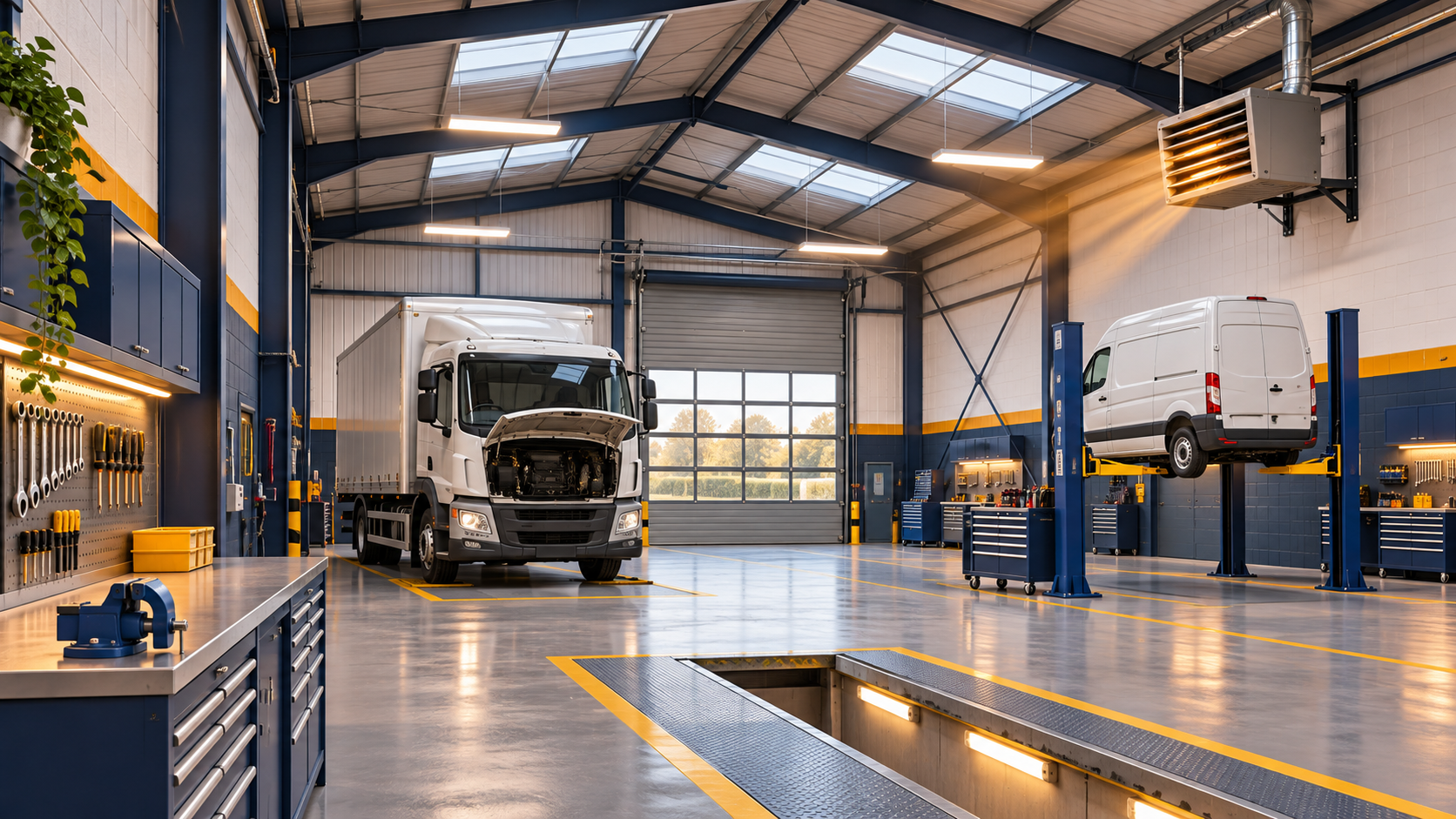
Two workshops with the same floor area can have very different heating requirements.
One might be well insulated, with low ceilings and doors that stay closed. Another might have a high roof, draughty cladding and vehicle doors opening throughout the day.
Before choosing a heater, consider:
- The building’s length, width and ceiling height.
- The condition of its insulation.
- How often external doors open.
- Whether you heat the whole workshop or particular working areas.
- Your working hours and required temperature.
- The gas and electrical supplies available.
If you’re still exploring the options, our guide to how to heat your workshop provides a broader starting point.
When is a gas workshop heater worth considering?
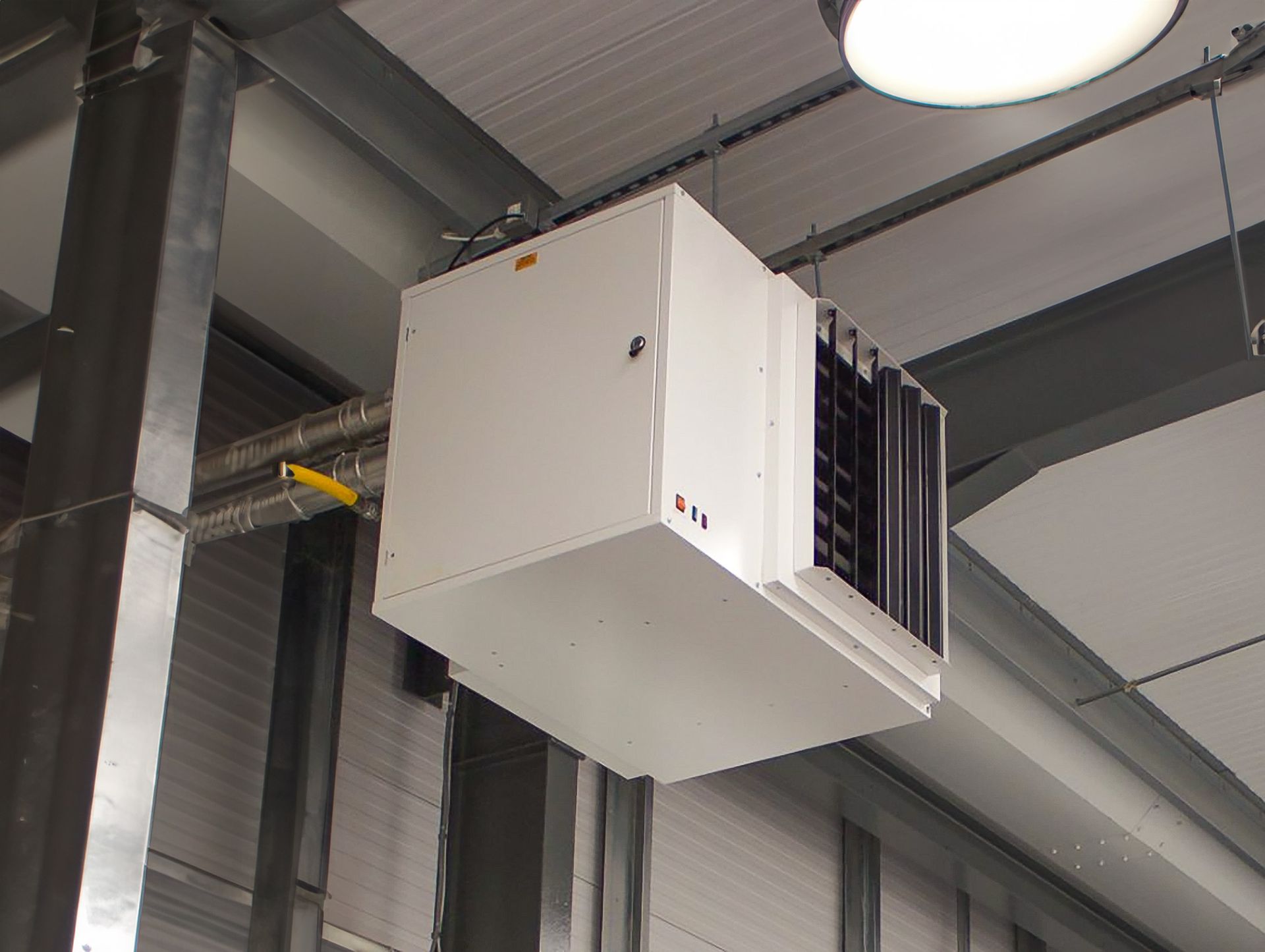
A gas warm-air heater is worth considering when you need to heat a substantial working area and have a suitable gas supply.
These heaters use a gas burner and fan to distribute warm air around the space. Suitability depends on the individual appliance, building layout and installation requirements.
Before ordering, confirm:
- Whether the heater is specified for natural gas or LPG.
- Whether the existing supply can support the appliance.
- The requirements for flueing and combustion air.
- Suitable mounting positions and service access.
- Which controls are compatible.
Don’t assume that an appliance can switch between natural gas and LPG without manufacturer-approved components and professional work.
You can browse our gas warm-air heaters to compare available models.
Gas installation and maintenance require competent specialists. HSE’s gas safety guidance for employers explains employers’ responsibilities and the importance of checking qualifications for the work involved.
When might an electric workshop heater suit your space?
An electric warm-air heater may be worth considering where gas is unavailable or where an electric solution suits your building and operating pattern.
There is no combustion flue associated with an electric resistance heater. However, the electrical supply still needs careful assessment.
A commercial electric heater can require substantially more capacity than an ordinary socket provides. Depending on the model, a three-phase supply may be necessary.
Before buying, ask an electrician to confirm:
- The available supply and spare capacity.
- The heater’s voltage, phase and current requirements.
- Any necessary circuit, protection or supply upgrades.
- The suitability of the proposed location.
Explore our electric warm-air heaters and check the individual specification before ordering.
Gas versus electric: what should you compare?
Buying considerationGas warm-air heaterElectric warm-air heaterAvailable supplySuitable gas supply requiredSuitable electrical capacity requiredInstallation checksGas connection, flueing, combustion air and clearancesCircuit capacity, phase, protection and clearancesRunning costsDepend on gas tariff, appliance efficiency and usageDepend on electricity tariff, heater demand and usagePositioningMust suit the appliance’s installation requirementsMust suit electrical and manufacturer requirementsMaintenanceBurner, flue and other components need appropriate attentionElectrical, fan and other components need appropriate attention
Neither option is automatically the cheapest overall. Compare the purchase price, installation work, operating costs and maintenance over the period you expect to use the heater.
What size workshop heater do you need?
Floor area is a useful starting point, but it isn’t enough to select the correct heater output.
Ceiling height, insulation, air leakage, door openings and the difference between indoor and outdoor temperatures all influence the building’s heat loss.
Choosing an undersized heater can leave the space struggling to reach temperature. Oversizing can add unnecessary cost and may affect how efficiently the system operates.
Ask for a heat-loss assessment before committing to a model. Check whether the specification quotes fuel input or useful heat output, as these figures are not interchangeable.
If your project needs a building assessment and installation support, Winrow’s workshop heating service is a useful next step.
Which workshop heater will cost less to run?
The honest answer is that you need your own tariff and usage figures to make a useful comparison.
For an electric resistance heater, a simple illustration is:
20kW electrical demand × 4 hours at full output = 80kWh of electricity.
Multiply that consumption by your electricity unit rate to estimate the energy cost for that period.
This is an illustration, not a prediction. Thermostatic cycling, output stages and working conditions affect actual consumption.
For gas appliances, use the manufacturer’s gas input or consumption figures alongside your gas tariff. Don’t calculate fuel consumption from useful heat output alone.
When comparing options, include installation costs, standing charges where relevant, servicing and any supply upgrades.
Controls deserve as much attention as the heater
A suitable heater can still waste energy if it operates when the workshop is empty or heats areas that don’t need it.
Think about timers, temperature settings and whether separate working areas need independent control. Check compatibility before buying, as controls are not universally interchangeable.
The Carbon Trust’s heating, ventilation and air conditioning guide provides further guidance on managing building heating and controls.
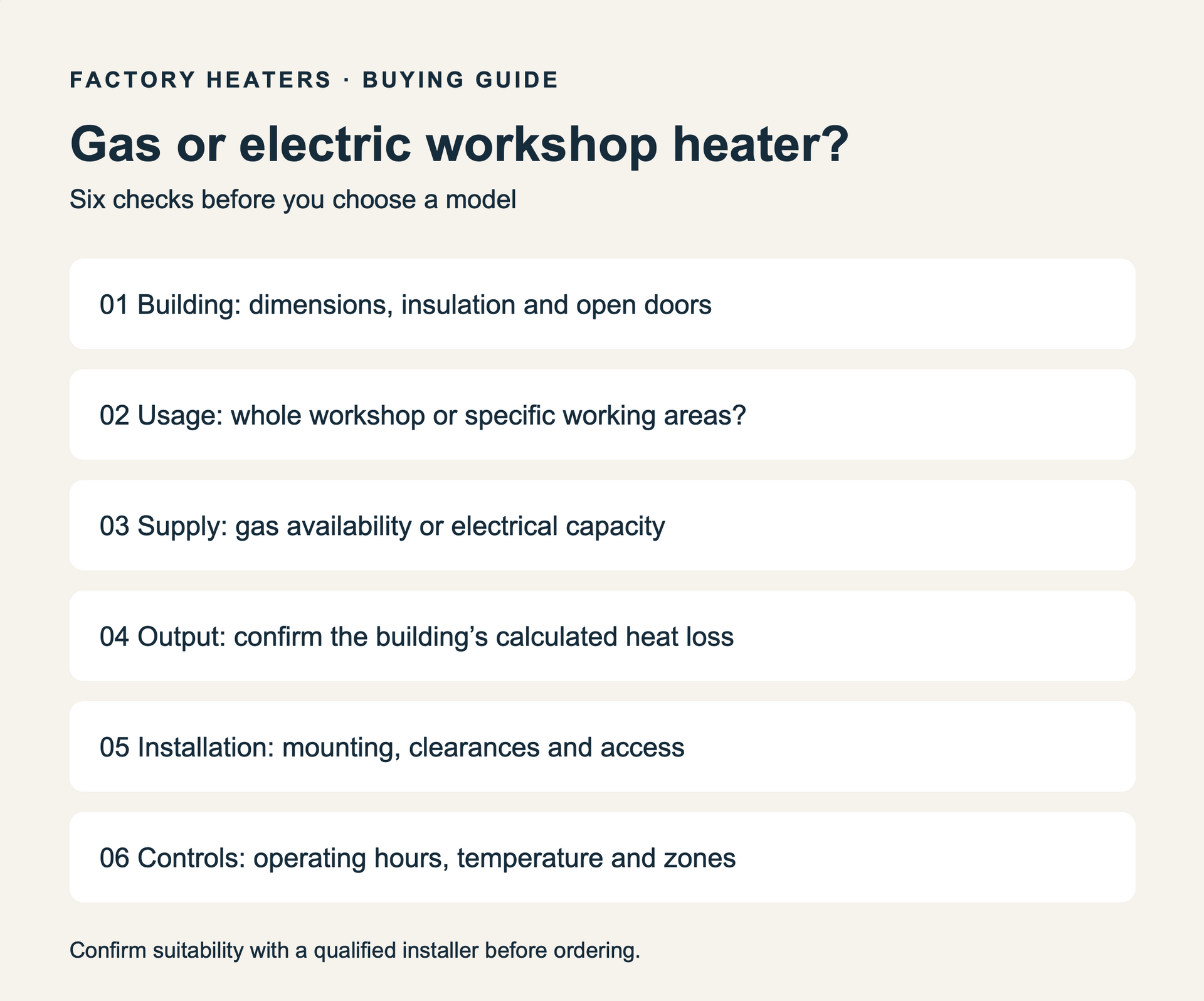
Six checks before you place an order
Before choosing your workshop heater, make sure you can answer these questions:
- What is the building’s calculated heating requirement?
- Is the gas or electrical supply suitable?
- Where can the heater be mounted safely?
- What installation work and accessories are required?
- Which controls will suit your working hours?
- Who will install, commission and maintain it?
Also tell your installer about dust, fumes, flammable materials or processes that may affect appliance suitability.
Is gas or electric better for heating a workshop?
Both can be suitable. Compare the building’s heating requirement, available supplies, installation work and likely operating costs before deciding.
Can I run a commercial electric workshop heater from a normal socket?
Only if the particular appliance is designed for that supply. Many commercial models require a dedicated circuit, and some require three-phase power. Check the specification with an electrician.
Can I choose a heater based on square metres alone?
Not reliably. Ceiling height, insulation and air leakage can make a substantial difference. A heat-loss assessment provides a better basis for selecting output.
Should I replace my existing heater with the same size?
Not automatically. Changes to the building, insulation, working hours or layout may mean a different output or arrangement would be more suitable.
Need help choosing a workshop heater?
Start by comparing our commercial warm-air heater range, including gas and electric options.
When you enquire, have your workshop dimensions, available energy supply and working hours ready. These details make it easier to discuss suitable models and identify anything your installer needs to confirm.
Explore warm-air heaters and ask us about the options for your workshop.
Frequently asked questions
Share This Post.
Need a Quote?
Is your business is looking for heating upgrade or an installation quote? Please call us on 08000 588 035 for a free quotation or fill out our contact form and we’ll get back to you as soon as we can.
If you could also attach some relevant images of the building and advise the building volumetric, it will help with our initial design assessment. Thank you.
Winrow - Enquiry Form
Industrial Heating - Latest News