
Reducing Carbon Footprint with Modern Heating Technologies
Sustainability and carbon emissions is a highly discussed and thought-about topic. There is no escaping this with the constantly evolving discussions and research that has been done globally on this topic. However, it may come as a surprise that heating is one of the UK’s leading sources of generators of carbon emissions. This contributes to rising emissions and climate change through the use of heating solutions that use fossil fuels.
Before we discuss the topic further to understand how modern heating technologies can assist in reducing carbon footprint, it is important to first define what carbon footprint is. Carbon footprint can be defined as the amount of greenhouse gases produced and its impact on the environment. It’s also important to understand how greenhouse gases are produced. This can be likened to all activities that an individual or business does that utilises fossil fuels. Activities such as the use of appliances, transportation, or emissions that are generated by the items we purchase throughout their supply chain all produce greenhouse gases.
While in hindsight reducing carbon footprint seems to be an easy task, there is much more to simply selecting more efficient and sustainable solutions. For example, the government in the UK has committed to net zero emissions. While achieving this target falls onto the government’s responsibility, without the support of individuals and businesses, it cannot be achieved. This also highlights the need for significant change throughout owner-occupied buildings, businesses, and supply chains, requiring much more well-thought-out initiatives and thorough research as to how this can be achieved.
It goes without saying that the challenge is enormous, far beyond individuals and businesses. This will involve all aspects of society coming together and uniting through practices to achieve this. There are no silver bullets to reduce carbon footprint and emissions, signifying this will take time and well-thought-out practices to achieve.
On the other hand, many older heating solutions have poor energy efficiency, and in some cases, buildings lack sufficient insulation. For this to be rectified, older heating appliances must be replaced with more energy-efficient and modern solutions. While most businesses and individuals would like the idea of implementing a modern heating solution, it raises the question of what cost this comes at. On a positive note, as technology is constantly evolving, modern technology is only becoming cheaper as time goes by.
In addition, the expert advice of companies such as Winrow Building Services helps businesses to select the right heating solutions. This allows businesses to get the most out of their investment and the potential to achieve a faster ROI. A number of incentives exist today easing the financial pressure for businesses, making the change more appealing. Lastly, when it comes to businesses, the workforce also has to be willing to make the change. The benefits far outweigh the challenges; however, it’s important to look at both sides before making the decision to purchase a modern heating solution.
Modern Heating Solutions to Reduce Carbon Footprint
A number of initiatives can be put in place to assist businesses in their mission of reducing their overall carbon footprint. From a modern heating standpoint improving insulation and selecting low carbon heating solutions can be beneficial. Businesses may not realise the importance of insulation and the direct impact it can have on everyday air circulation in buildings. Poor insulation often has a roll-on effect on the efficiency of heating solutions. In many cases, this can result in the appliance working overtime to keep the area at the desired temperature.
Warm Air Heating Solutions
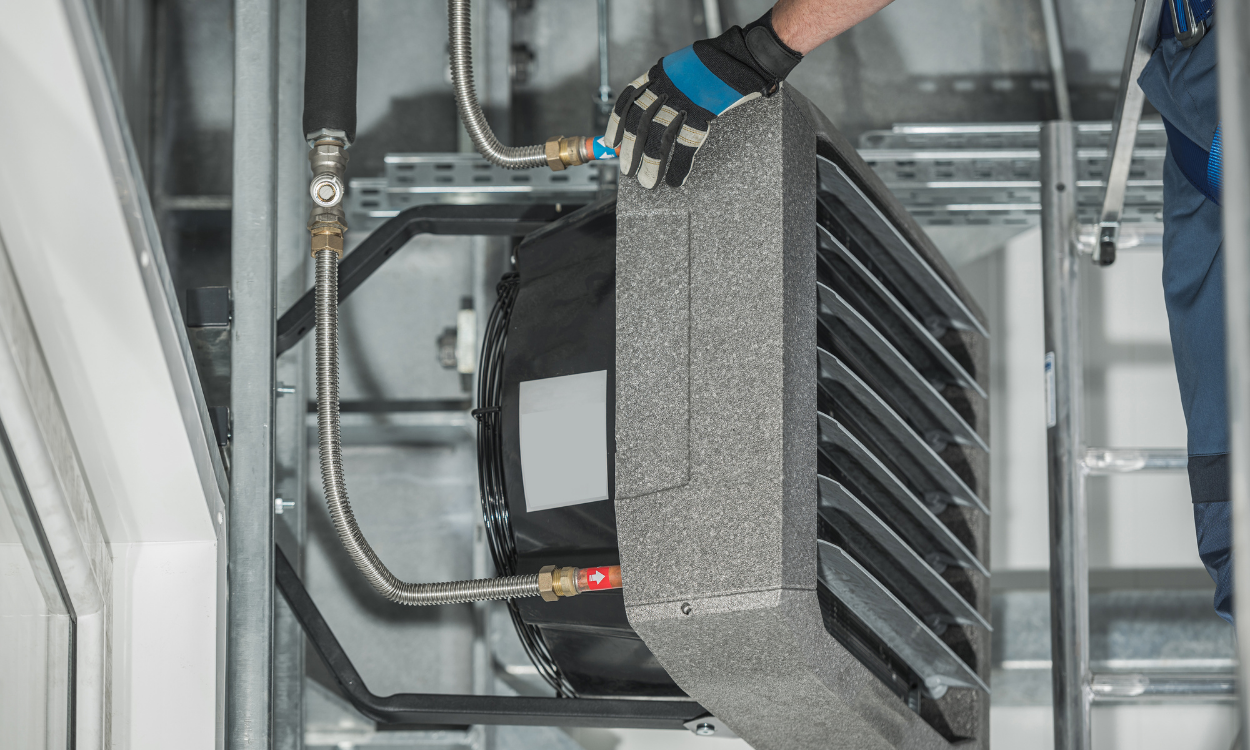
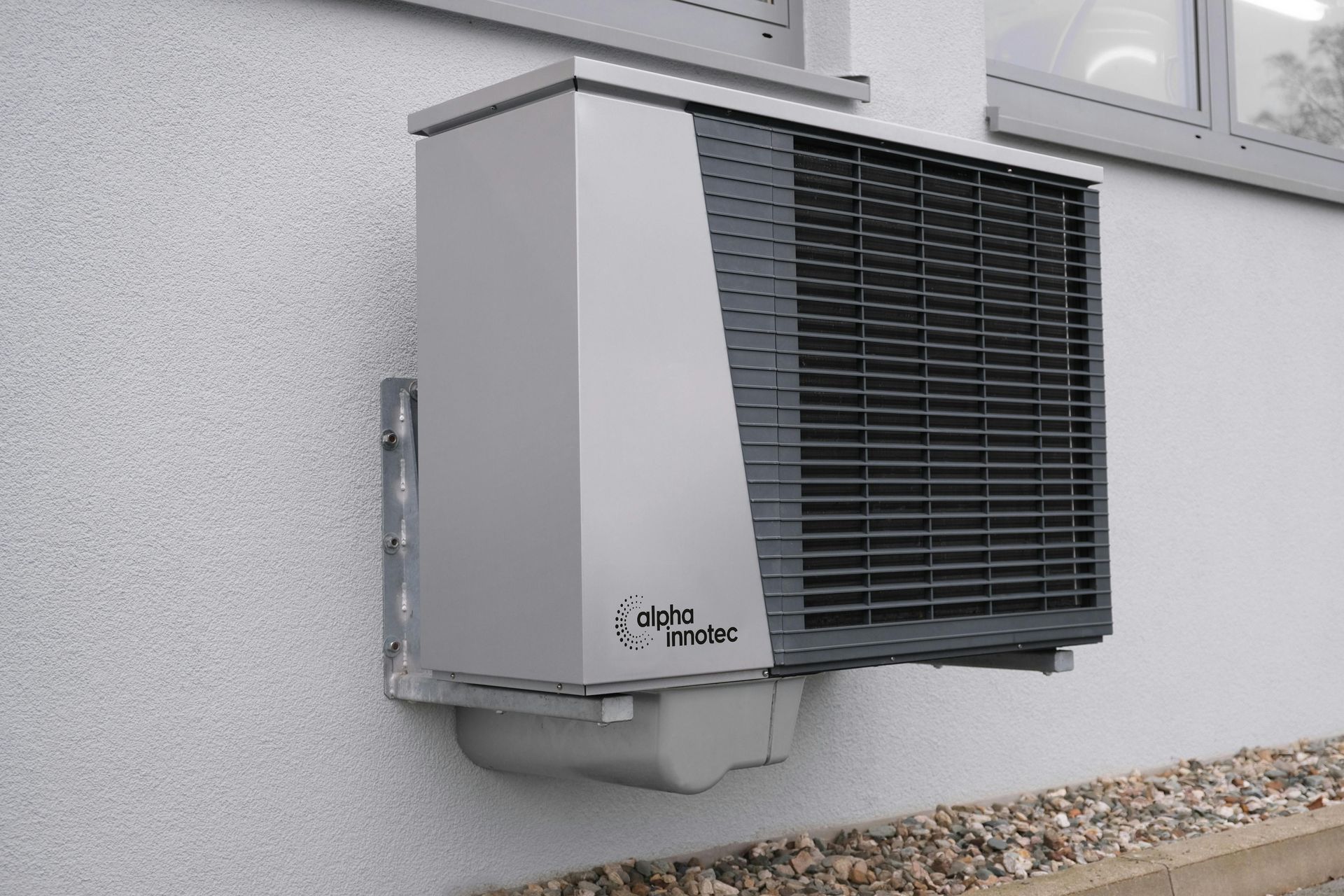
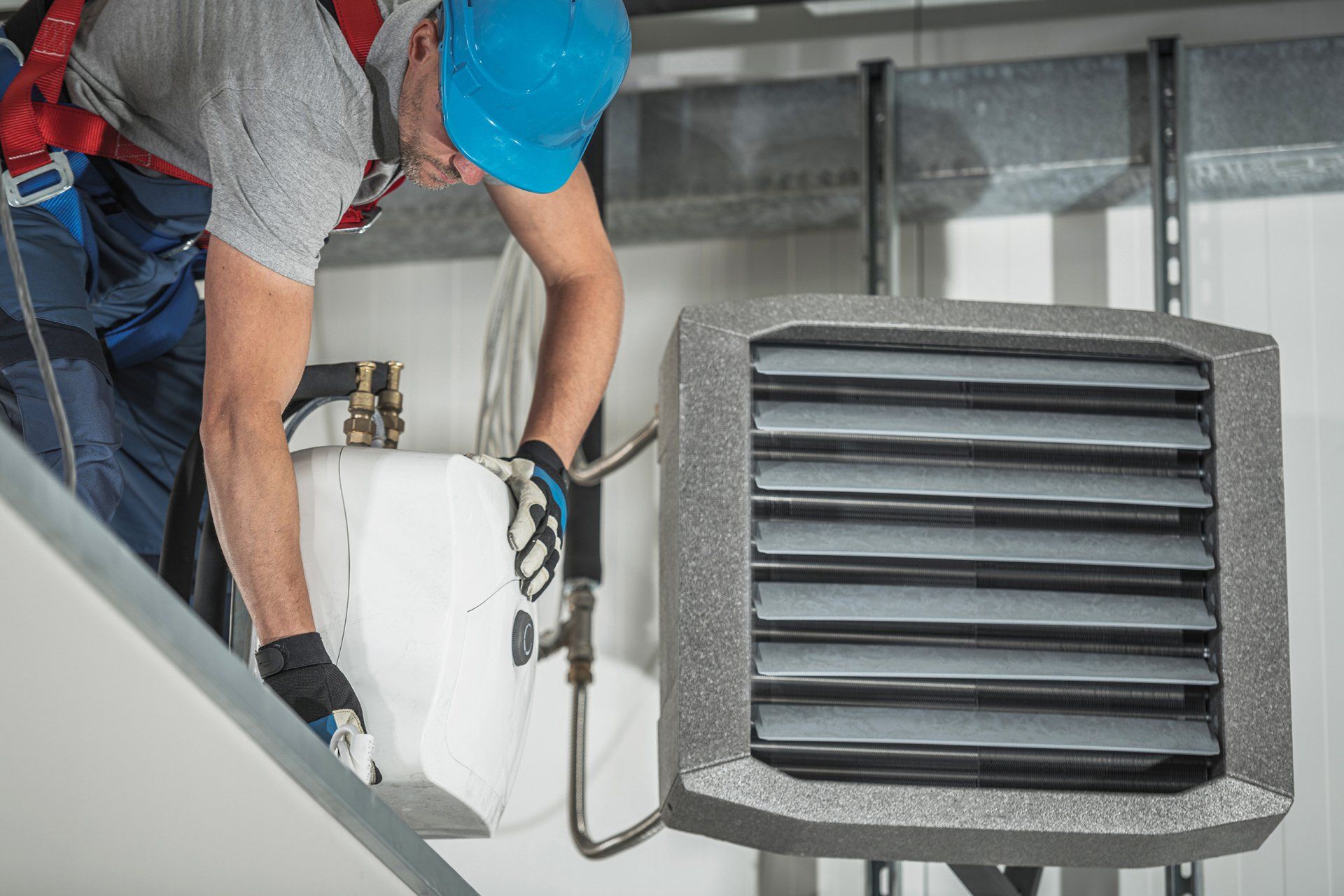
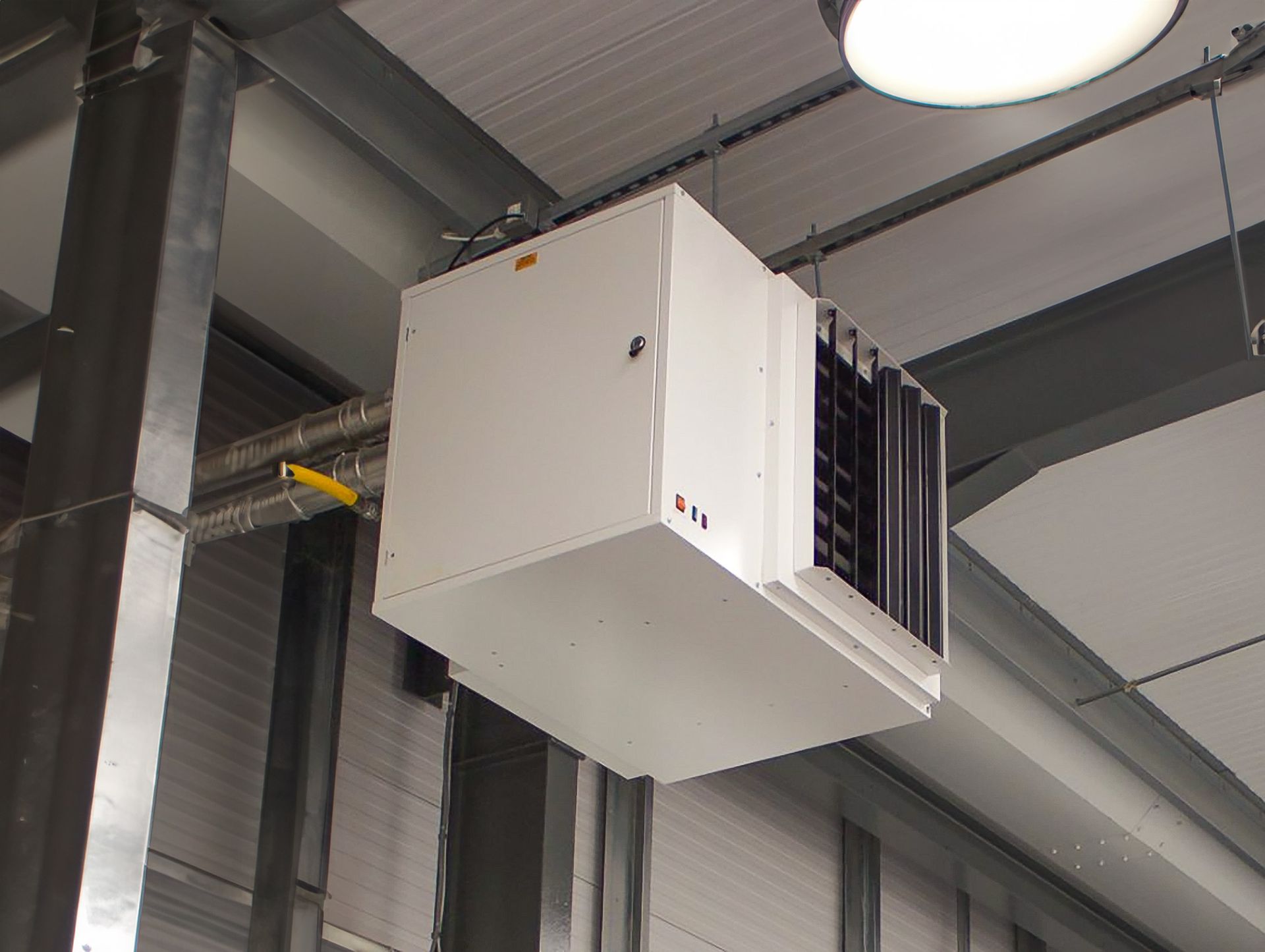
This refers to appliances or systems that heat and distribute air throughout an area, providing warm air. Typically, the system will utilise a central heater to warm air and then circulate this through a network of ducts and vents. These systems can be powered by a range of energy sources such as natural gas, electricity, or renewable fuel sources.
With modern heating solutions, this is a popular option due to their eco-friendly benefits. The benefits include energy-efficient operation, fast heating time, quiet operation, and smart controls. Compared to conventional unit heaters, it is possible to see energy savings of 15%. This makes modern warm air heating solutions a popular choice for our clients at Winrow Building Services.
Boilers
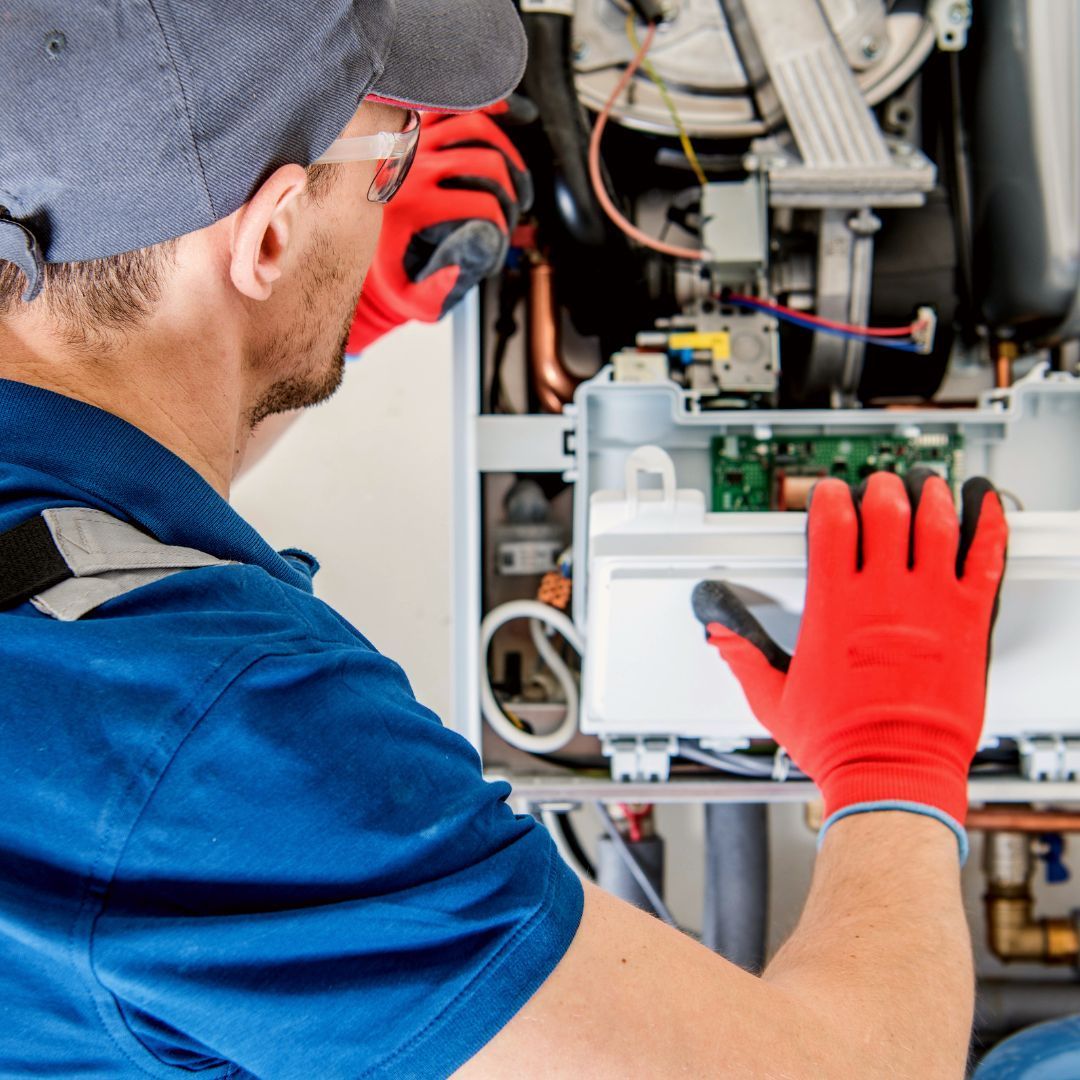
Boilers are another popular heating solution that our customers select at Winrow. Boilers are designed for hot water heating services and central heating. Boilers can use various fuel sources such as renewable energy sources, gas, or electricity. The heated water generally circulates through pipes or other heat exchangers.
At Winrow, sustainability is top of mind as we implement solutions into our ecosystem that are eco-friendly for our clients. For example, our high-efficiency condensing boilers are capable of blending 30% hydrogen & 70% natural gas. This together supports our customers’ sustainability efforts and ESG initiatives. In addition, this also aligns with the UK government’s emission reduction targets.
Strategies to Improve Energy Efficiency Reducing Carbon Footprint
There are several strategies that can be used in order to reduce carbon footprint for businesses.
1. Smart Solutions
By implementing modern heating systems, smart solutions such as thermostats and smart controls can be used. This can assist with programming the heating solutions to the desired conditions, ensuring that the appliances are only utilised when they need to. This reduces the overuse of the appliance and helps to cut down on any unnecessary cost of use.
These types of solutions can also allow zone heating of facilities, whereby heating is only used in the areas required during operation. This can easily be programmed as required, including the use of building management systems that allow for a number of systems to be integrated and controlled altogether.
2. Integration of Heating Solutions
Various types of heating solutions can also be implemented to complement one another. For example, de-stratification fans can be used to redistribute the rising heat in facilities, whereby hot air rises towards the roof. This allows the air to recirculate back down towards lower levels, allowing for heating appliances to not have to overcompensate.
3. Regular Routine Maintenance
Another aspect is ensuring regular routine maintenance is also abided by. If maintenance is not adhered to, this can result in issues with the appliances not being identified early. This can result in higher costs and downtime to have the heating solutions fixed. Ensuring routine maintenance is adhered to can also extend the life of heating solutions. This allows businesses to make sure they get the most use and life out of the appliance.
Why Make the Change to Modern Heating Solutions to Reduce Carbon Footprint?
There are endless reasons why businesses should look at implementing modern heating solutions, enabling them to reduce their carbon footprint.
1. Firstly, there is a significant and large focus on the UK working its way towards achieving net zero by 2050. Without businesses being on board with achieving this, the government will not be able to meet the expected targets. In saying this, it’s a great time to make the change over to more sustainable solutions. This is due to a number of incentives and grants in place by the government, incentivising not only businesses but also individuals. This limits the hit to pockets and hopes to ensure businesses can see a return on investment more quickly. If nothing else, the short-term savings in the monthly running cost have the potential to be a significant driving force for many.
2. In addition, other potential benefits will come with this, such as making the running costs more predictable overall for users and reducing reliance on fossil fuel-powered appliances. On top of this, modern heating solutions can fit in well with enhancing corporate social responsibility initiatives and allow for better customer and employee experiences through more reliable and efficient heating solutions.
In conclusion, reducing carbon emissions remains a pressing global issue, with heating in the UK standing out as a significant contributor to greenhouse gas production. Understanding the concept of carbon footprint and the various activities that generate these emissions provides essential context for addressing climate change. By recognising the impact of traditional heating methods and the broader implications of our daily actions, we underscore the urgency of adopting modern, cleaner heating technologies. Moving forward, embracing sustainable solutions is crucial for reducing carbon emissions and ensuring a healthier planet for future generations. Reach out to us today at Winrow to get a quote for all of your heating needs.
Share This Post.
Need a Quote?
Is your business is looking for heating upgrade or an installation quote? Please call us on 08000 588 035 for a free quotation or fill out our contact form and we’ll get back to you as soon as we can.
If you could also attach some relevant images of the building and advise the building volumetric, it will help with our initial design assessment. Thank you.
Winrow - Enquiry Form
Industrial Heating - Latest News